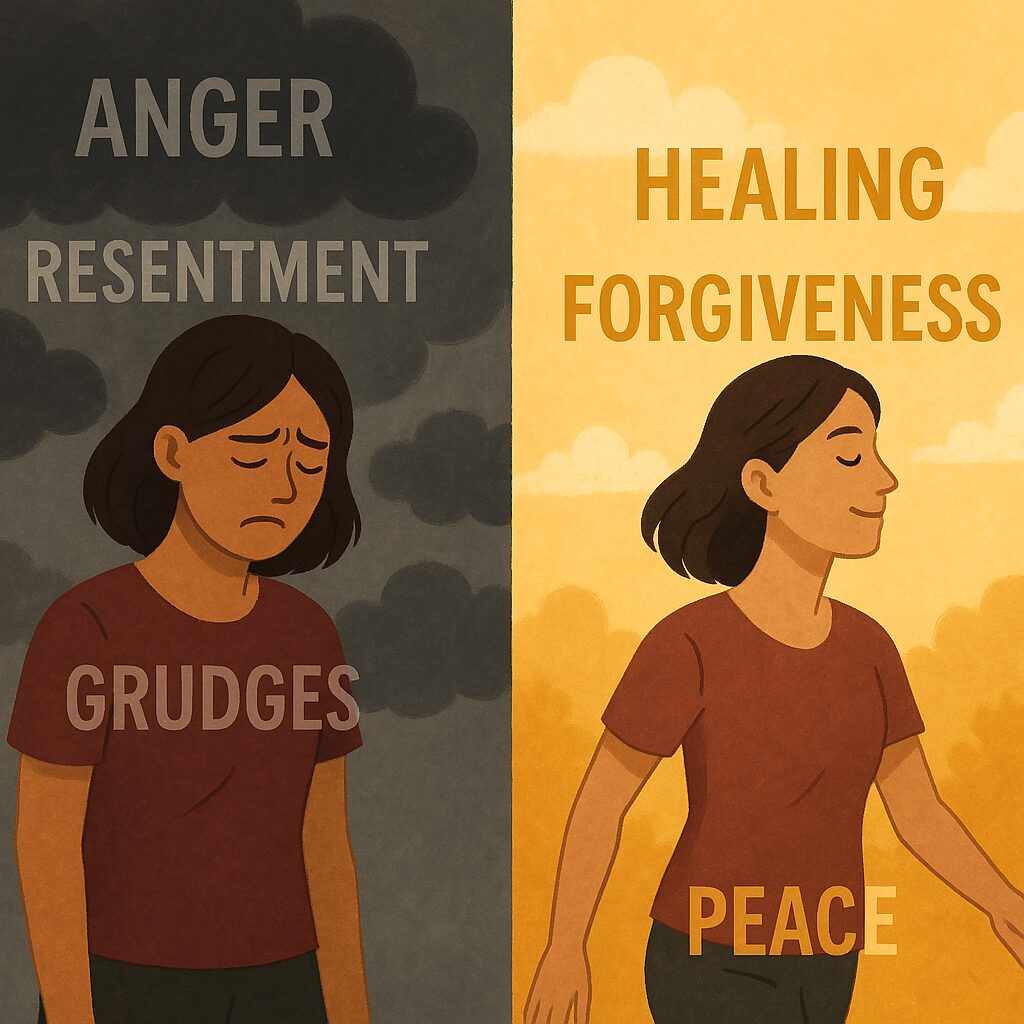
Multiple Sclerosis has been a real challenge for several of our dearly loved family members. Watching them navigate the physical, emotional, and mental toll of this unpredictable disease has opened our eyes to just how deeply health is connected to every part of the human experience—especially the unseen burdens we carry in our hearts. I wrote this article out of love and a desire to share something hopeful: that emotional healing—letting go of bitterness, anger, and pain—may not only lighten the spirit but also support the body’s ability to cope and heal.
Holding on to anger, grudges, and bitterness doesn’t just weigh on your mind—it can weigh on your body, too. Research is revealing a strong link between chronic emotional stress and physical illness, especially autoimmune disorders like Multiple Sclerosis (MS). For those already living with autoimmune challenges, emotional healing might be one of the most powerful steps toward physical wellness.
The Hidden Toll of Negative Emotions
Negative emotions such as unresolved anger, resentment, or bitterness keep your body in a heightened state of stress. While temporary stress can be helpful in survival situations, chronic emotional stress causes a consistent release of hormones like cortisol and adrenaline.
Long-term elevation of stress hormones can:
- Suppress immune function
- Promote systemic inflammation
- Disrupt sleep and gut health
- Increase cardiovascular strain
Scientific Insight: According to the American Psychological Association, chronic stress contributes to long-term inflammation and is associated with a range of diseases, including autoimmune disorders, cardiovascular disease, and diabetes (Segerstrom & Miller, 2004; APA, 2023).
Emotional Stress and Autoimmune Disease
Autoimmune diseases like MS occur when the body’s immune system mistakenly attacks its own tissues. In MS, this attack is directed at the protective myelin sheath surrounding nerve fibers.
Research shows emotional trauma and chronic stress may both trigger and worsen autoimmune activity. A population-based study in JAMA found that individuals exposed to high levels of stress had a 36% increased risk of developing autoimmune diseases (Song et al., 2018).
Furthermore, another study in Frontiers in Immunology explains that prolonged psychological stress impairs immune regulation and enhances susceptibility to autoimmune flares by increasing inflammatory cytokines (Dhabhar, 2014).
In essence, harboring negative emotions may train the immune system to stay in “attack mode”—a dangerous state for someone with MS.
The Healing Power of Forgiveness
Letting go doesn’t mean denying what happened or excusing harmful actions. It means you’re no longer willing to let someone else’s actions keep your nervous system in distress.
Practicing forgiveness and emotional release can:
- Reduce cortisol levels
- Decrease inflammation markers like C-reactive protein
- Improve immune system regulation
- Lead to better physical health outcomes
Scientific Insight: A 2006 study in Psychology & Health found that people who practiced forgiveness reported better physical health and fewer symptoms of illness (Lawler et al., 2006).
Steps Toward Emotional Freedom
If you’re living with MS or another chronic illness, and feel weighed down by emotional pain, here are steps to help you let go:
- Acknowledge the Hurt
Denial won’t protect you. Naming the wound is the first step toward healing. - Process the Emotion Safely
Talk with a counselor, journal, or use art and creative outlets. - Practice Mindful Relaxation
Meditation, yoga, and breathing exercises help calm the stress response. - Try Forgiveness Work
Write unsent letters, visualize releasing pain, or explore spiritual forgiveness. - Find a Support System
Healing doesn’t mean doing it alone. Seek out trusted friends, therapists, or faith communities.
Final Thoughts
Autoimmune diseases are complex, and there’s no single cause. But your emotional state does affect your biology. Letting go of grudges isn’t about giving in—it’s about rising above. Releasing bitterness can be one of the most profound acts of self-care for your mind, your heart, and your immune system.
Your body listens to your thoughts. When you choose peace over resentment, you’re choosing healing over harm.
Sources
- Song, H., Fang, F., Tomasson, G., et al. (2018). Association of Stress-Related Disorders With Subsequent Autoimmune Disease. JAMA, 319(23), 2388–2400. https://doi.org/10.1001/jama.2018.7028
- Dhabhar, F. S. (2014). Effects of stress on immune function: The good, the bad, and the beautiful. Immunologic Research, 58, 193–210. https://doi.org/10.1007/s12026-014-8517-0
- Lawler, K. A., Younger, J. W., Piferi, R. L., et al. (2006). The unique effects of forgiveness on health: An exploration of pathways. Psychology & Health, 21(5), 571–588. https://doi.org/10.1080/14768320500359865
- Segerstrom, S. C., & Miller, G. E. (2004). Psychological Stress and the Human Immune System: A Meta-Analytic Study. Psychological Bulletin, 130(4), 601–630. https://doi.org/10.1037/0033-2909.130.4.601
Leave a Reply